


I’ve been spending time vibe-coding to stay close to where AI tooling is actually heading. Along the way, I’ve been running experiments, shipping small systems, and learning what works (and what doesn’t) in real use. This is the first post in a series where I’ll share those builds and takeaways.
Primary coding agent(s): Codex
Honeybooks
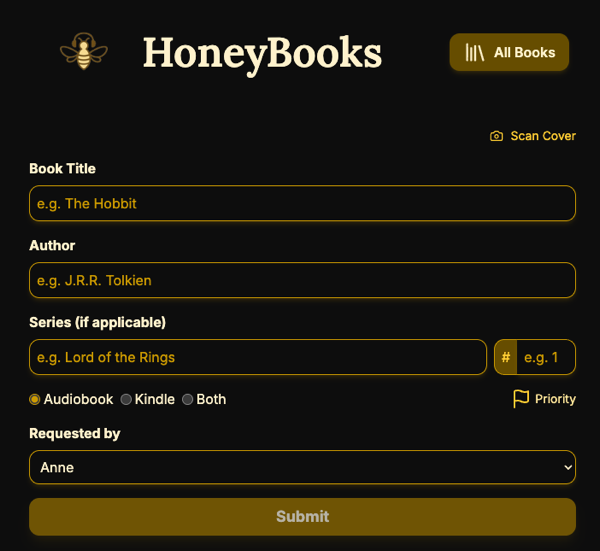 I built Honeybooks because audiobook requests in our house were getting messy.
We had requested titles in one place, library status in another, and no easy way to know what was actually done.
I built Honeybooks because audiobook requests in our house were getting messy.
We had requested titles in one place, library status in another, and no easy way to know what was actually done.
Honeybooks is the glue layer between requests and Audiobookshelf.
What it does
- Tracks requested books by title, author, requester, notes, and priority
- Lets me mark real availability state (
audiobook,kindle,audible,both, or blank) - Supports fast filtering for queue cleanup:
requested(unresolved requests)available/unavailable- requester-specific views
- priority-only views
- Supports direct edits and bulk actions from admin views
Audiobookshelf integration
When I mark a book as available, Honeybooks can do an ABS lookup before finalizing.
If the match is uncertain, I can confirm the correct ABS item from an overlay.
Once confirmed, Honeybooks stores ABS linkage (abs_id) and metadata without clobbering fields I want to keep.
So the workflow is:
- request enters Honeybooks
- book is matched to ABS
- availability is updated
- notification gets sent
Notification pipeline (technical)
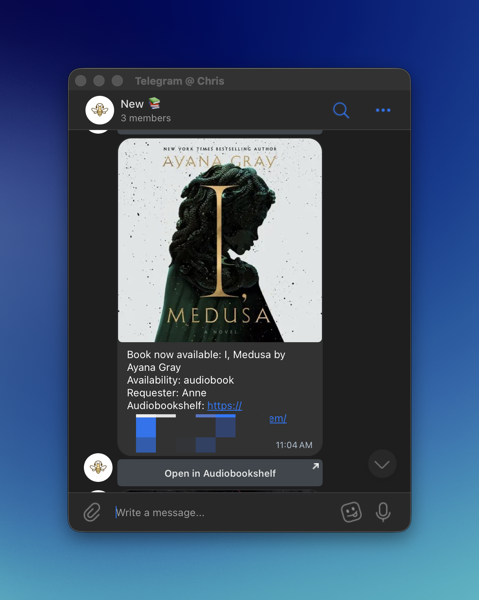
Honeybooks uses event-driven notifications, not just UI-side actions.
- A Postgres trigger queues an
availability_eventonly when a book transitions from not-available to available notification_rulescontrol destination and filtering (Telegram / Pushcut / webhook)notification_deliverieslogs sent/failed status per event/rule pair- A dispatch endpoint processes queued events in batches
This keeps notifications predictable, traceable, and easy to troubleshoot.
Why We use it
Honeybooks gives me one operational view of “what was requested” vs “what’s actually available,” with ABS verification and notification delivery built in. And my spouse is actually using it and enjoying having this all centralized (and notifications!) without needing to parse a never-ending list in Apple Notes.